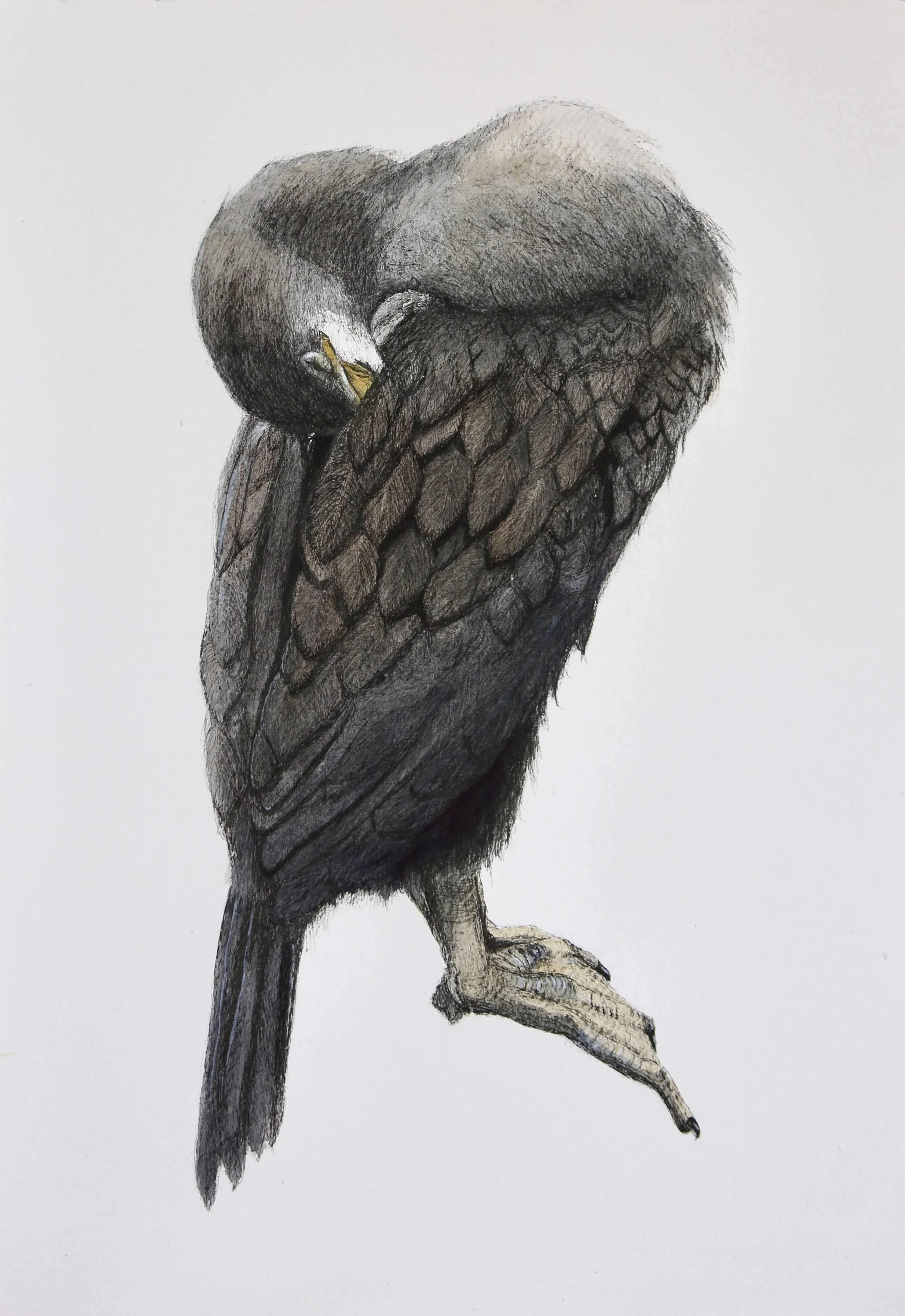
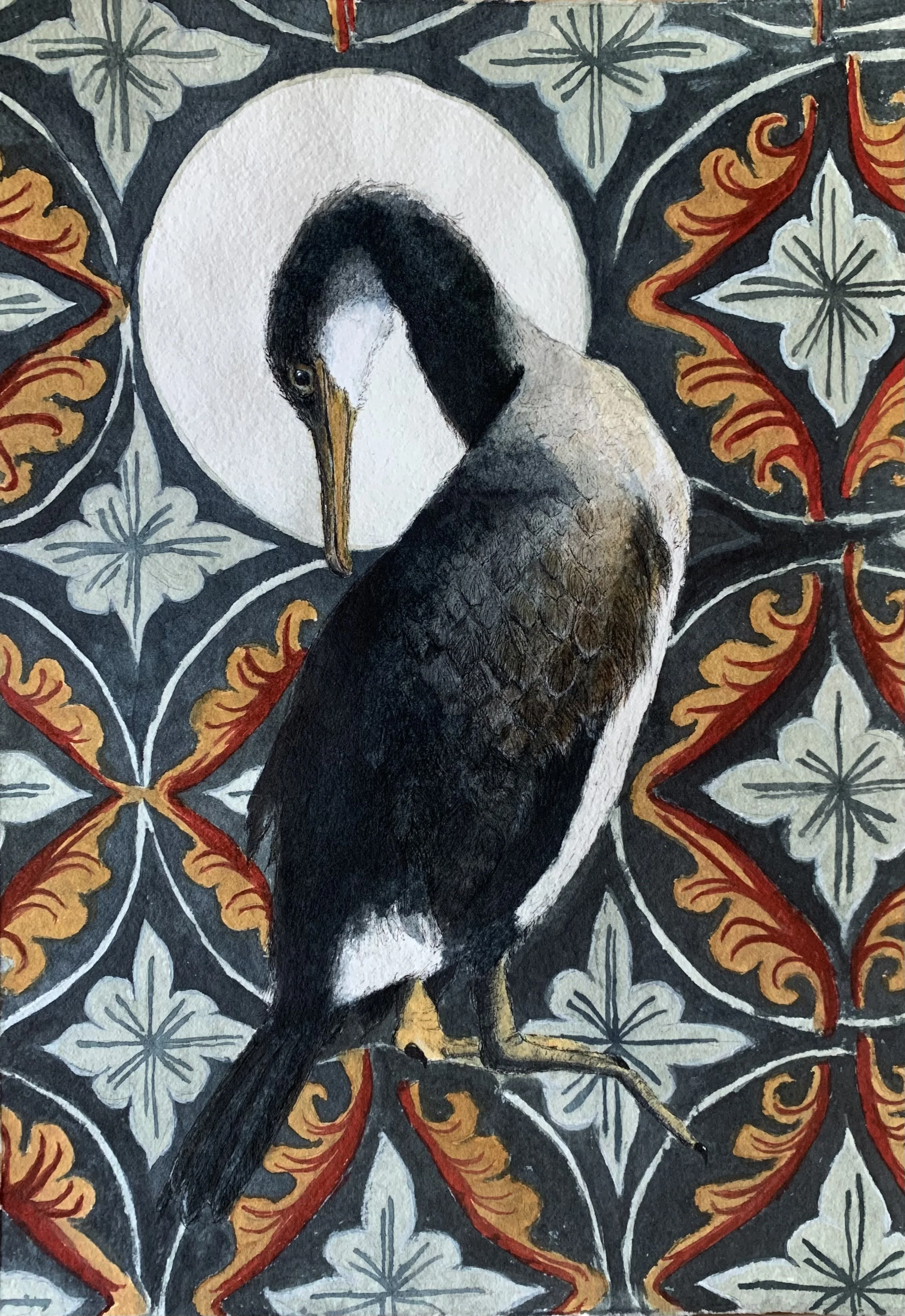
bestiarium
In the Middle Ages the Physiologus and medieval bestiaries were relied on as compendiums of natural history, providing descriptions, anecdotes, and illustrations of known animals, some coming from observation and others reinterpreted from Egyptian, Greek and Roman myths and ancient writings, which often influenced each other.
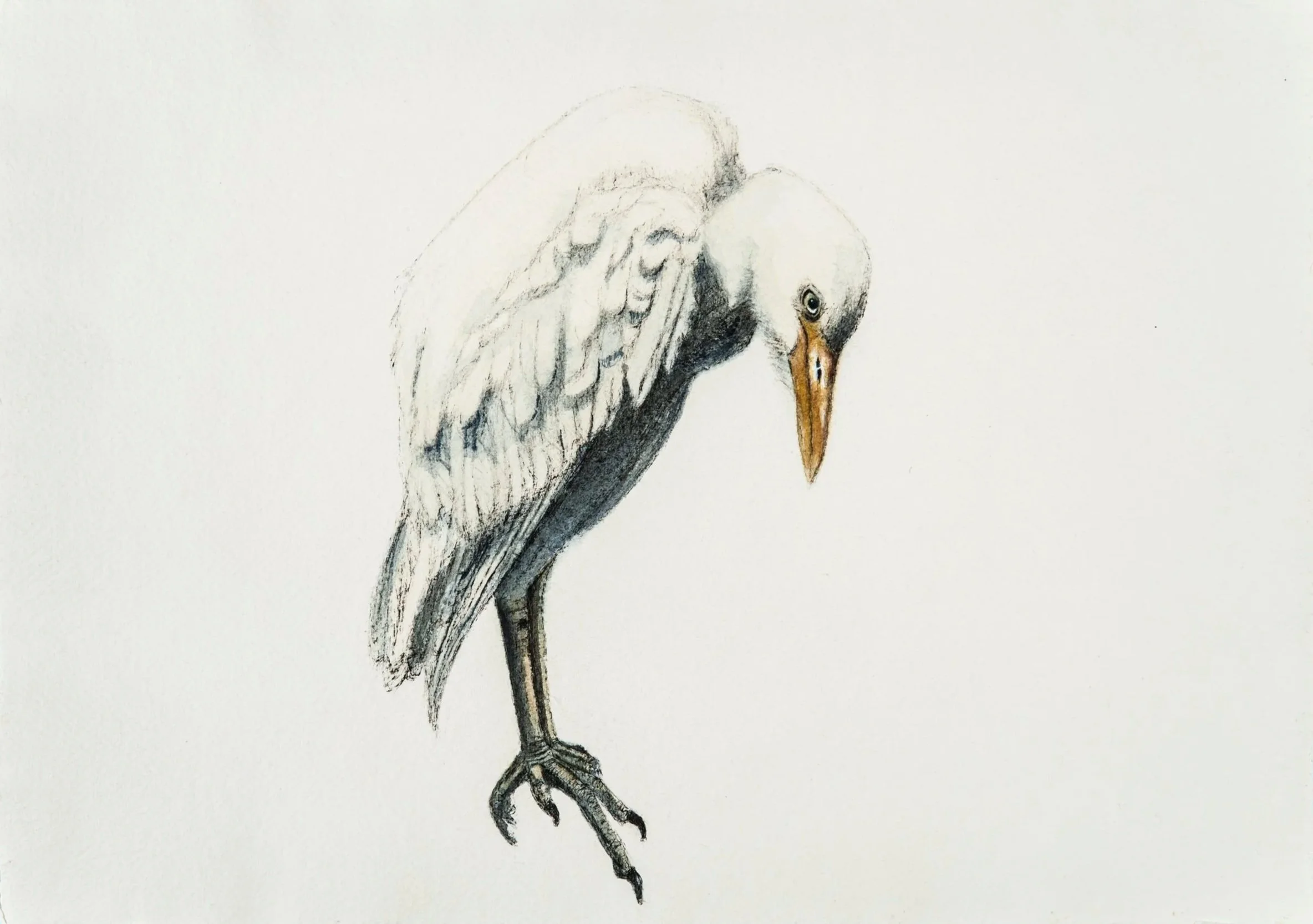
The healing bird, the caladrius, shows up in several Greek, Roman and medieval contexts, and was known in some manuscripts to be a pure white bird, or a bird with yellow eyes. The caladrius lived in the palaces of kings. It was sought after during a person’s serious illness. The bird is often depicted perched on the bed of the infirm, and with all good luck, looking into the eyes of the patient, drawing the illness out of their body, and flying it away into the sun to be incinerated.
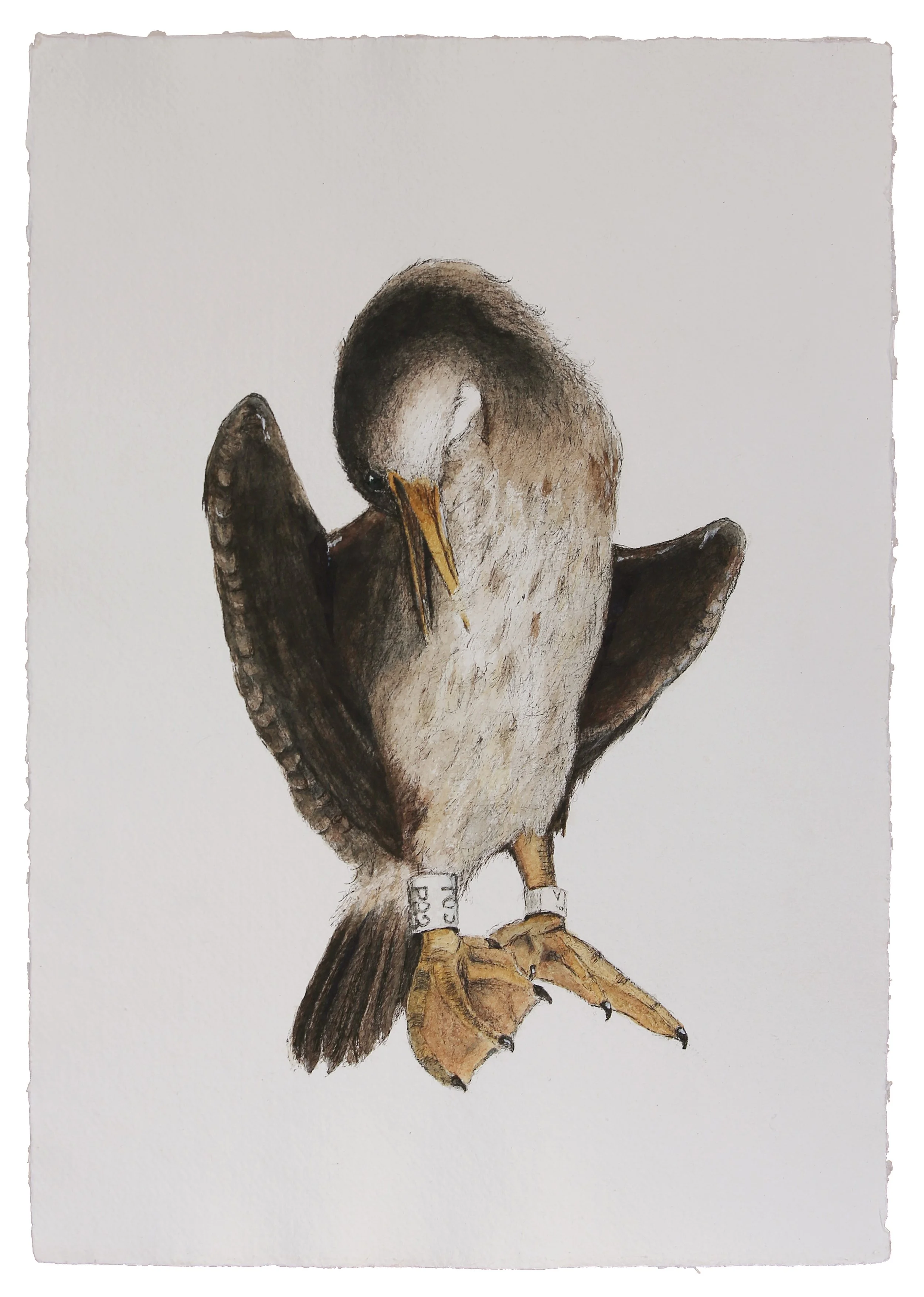
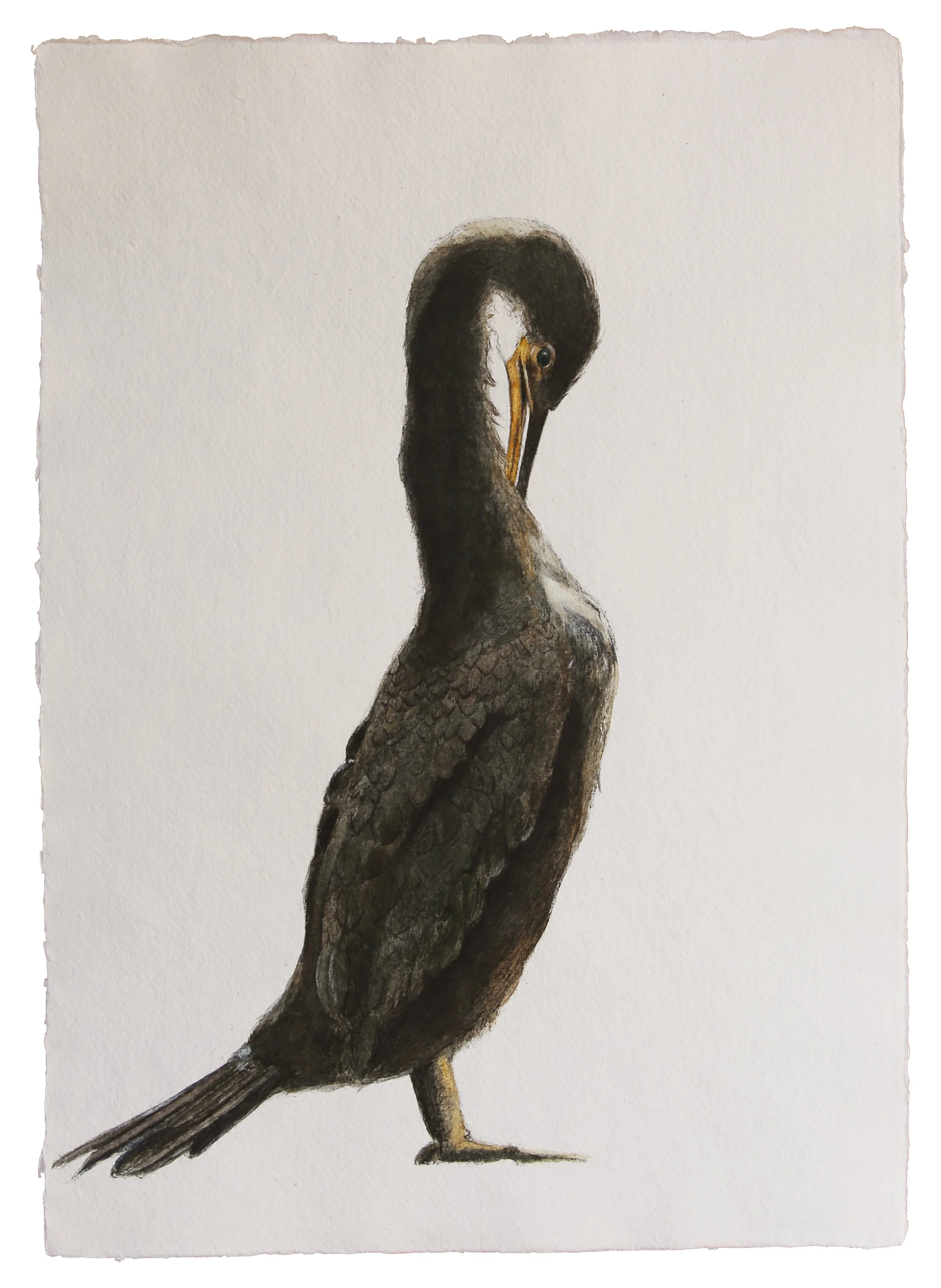
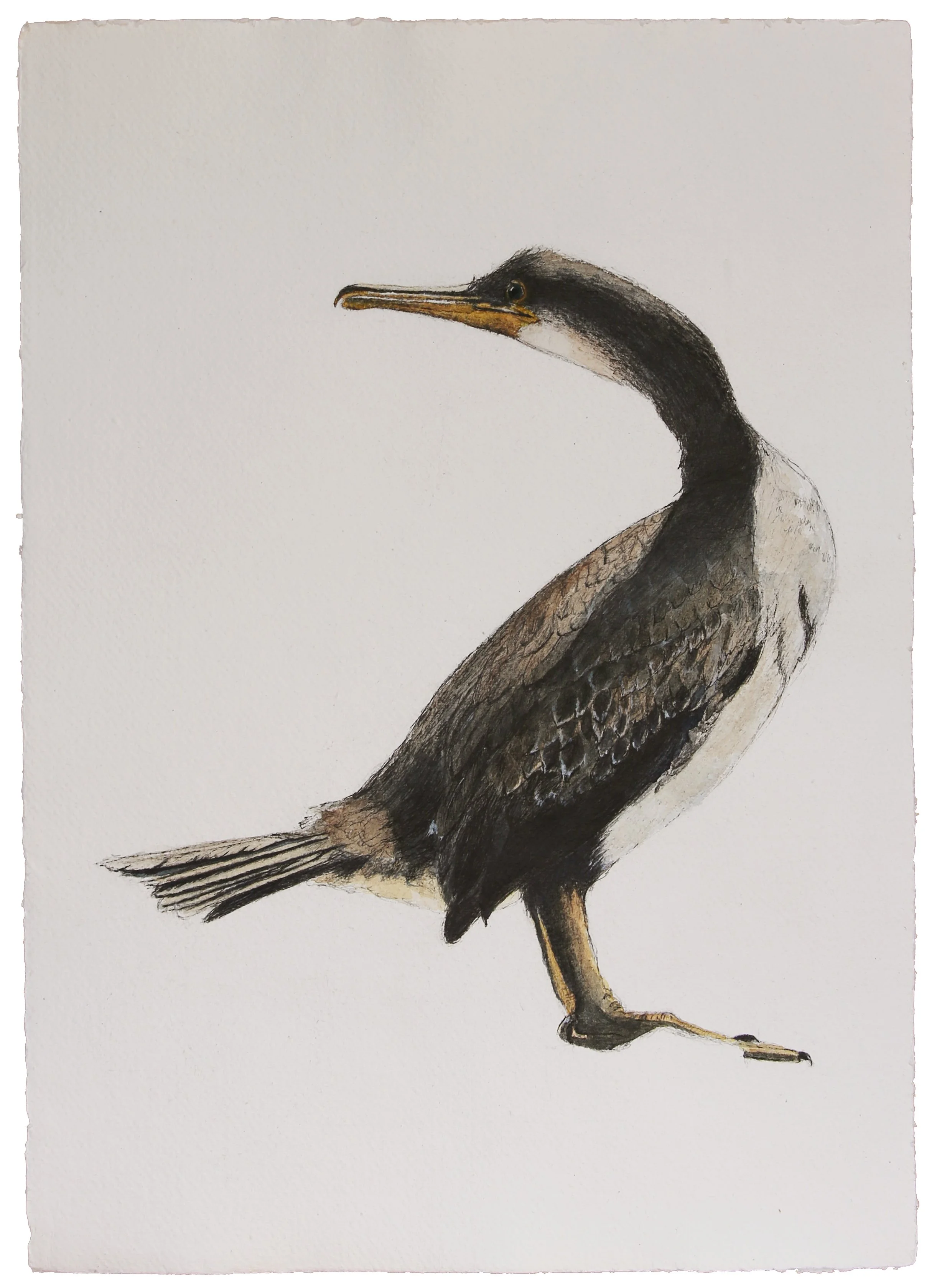
In my latest series of paintings, I’ve expanded my exploration of birds in the Mediterranean region to encompass how they were represented and understood in Medieval Europe, especially in illuminated manuscripts where myth and fact were indistinguishable, both living and mythical creatures were recorded side by side.
For the medieval population, the illustrations in these bestiaries enabled stories to spread to a largely illiterate population; the depictions interpreted the natural world and provided a structure to the unknown. In my own paintings, these birds, in their centuries old connection to the stories humans have told each other, bring these mythologies alive again. They also question how observation is filtered through belief; how its representation reflects our own perspective and ideas about the world that surrounds us and what we are very much a part of.